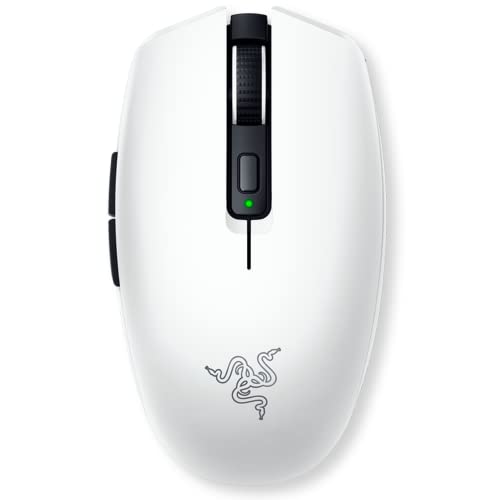
The wireless vs wired gaming mouse debate used to have an easy answer: wired for anything competitive. That is no longer true. Modern gaming-grade wireless mice use low-latency 2.4GHz connections that perform on par with wired mice for practically every player, and many professional players now use wireless. The real differences today are weight, battery management, price, and how much you value a cable-free desk.
This guide explains what actually separates wired and wireless gaming mice, which specs matter, and how to pick the right shape, weight, and sensor for the way you play.
The quick answer
- Choose wireless if you want a clean desk, freedom of movement, and you do not mind charging. Gaming-grade wireless is fast enough for competitive play.
- Choose wired if you want the lowest price for a given level of quality, the lightest possible weight at a budget, or never want to think about a battery.
- Avoid Bluetooth-only mice for gaming. Bluetooth is convenient for laptops and office work, but it has higher latency than a dedicated 2.4GHz receiver.
| Factor | Wired | Wireless (2.4GHz gaming) |
|---|---|---|
| Latency | Excellent | Excellent on gaming models |
| Price for the same quality | Lower | Higher |
| Weight | Lighter at the same price | Battery adds weight, though top models are very light |
| Cable drag | Possible, reduced by a paracord cable | None |
| Charging | Never | Required, typically every few days to weeks |
| Desk setup | Cable to manage | Clean |
Is wireless fast enough for competitive gaming?
Yes, provided it is a gaming wireless mouse with a 2.4GHz USB receiver. Brand technologies such as Logitech LIGHTSPEED, Razer HyperSpeed, and similar systems from other makers are designed for gaming and deliver latency comparable to wired connections.
What makes the difference is the connection type:
- 2.4GHz receiver: designed for gaming, very low latency.
- Bluetooth: convenient and power-efficient, but slower and less consistent. Fine for everyday use, not ideal for competitive games.
- Wired over USB: the baseline every wireless mouse is measured against.
Many gaming mice support all three, using Bluetooth for a laptop on the go and the 2.4GHz receiver for gaming.
Polling rate
Polling rate is how often the mouse reports its position to the PC. 1000Hz (once per millisecond) has been the gaming standard for years. Some newer mice support 4000Hz or 8000Hz, which can make cursor movement feel smoother on very high-refresh monitors. Higher polling rates use more battery on wireless mice and more CPU time, and the benefit is subtle. For most players, 1000Hz is plenty.
Weight: why lighter mice became popular
Over the past few years, gaming mice have become much lighter. A lighter mouse is easier to start and stop, which helps with fast flick aiming and reduces fatigue over long sessions.
As a rough guide:
- Under 60g: ultralight, popular with competitive FPS players.
- 60 to 80g: light, a good balance for most players.
- 80 to 100g and above: heavier mice, often with more buttons or a premium build. Some players prefer the stability.
Wireless mice carry a battery, which adds weight, but the best wireless models are now as light as many wired ones. Our lightweight gaming mice list shows current options.
Shape and grip matter more than wired or wireless
The single most important factor in how a mouse feels is shape, and how it suits your hand size and grip style.
The three grip styles
- Palm grip: your whole hand rests on the mouse. Suits larger, ergonomic shapes with a high back.
- Claw grip: your palm touches the back of the mouse and your fingers arch. Suits medium shapes with a pronounced hump toward the back.
- Fingertip grip: only your fingertips touch the mouse. Suits small, light mice.
Ergonomic vs ambidextrous
- Ergonomic mice are sculpted for the right hand and are usually more comfortable for palm grip.
- Ambidextrous (symmetrical) mice suit claw and fingertip grips and left-handed players, though side buttons are usually only on the left.
If you can, try shapes in a store or compare a mouse's dimensions with one you already like. Our ergonomic gaming mice list is a good starting point for palm grip.
Sensors and DPI
Modern gaming mouse sensors are excellent across the board. Nearly every current gaming mouse from a major brand tracks accurately at the speeds people actually move.
DPI (dots per inch) measures sensitivity. High maximum DPI numbers are mostly marketing; most players use somewhere between 400 and 1600 DPI and adjust in-game sensitivity from there. What matters more is that the sensor tracks consistently without acceleration or jitter, which all reputable gaming sensors do.
Things that are worth checking:
- Lift-off distance: lower is better for players who lift and reposition the mouse often.
- Switch type: optical switches resist the double-clicking failures that can affect older mechanical switches.
- Feet: smooth PTFE feet make a noticeable difference to glide.
Battery life and charging
Battery life varies widely. Lightweight competitive mice often last several days to a couple of weeks per charge, while larger mice with bigger batteries can last much longer, especially with RGB lighting off.
Charging options include:
- USB-C cable: most common; you can usually keep playing while it charges.
- Charging docks: convenient and tidy.
- Wireless charging mouse pads: offered by some brands for compatible mice, so the mouse never needs plugging in.
Turning off RGB lighting is the easiest way to extend battery life significantly.
Price: what you get at each level
| Budget | What to expect |
|---|---|
| Under $30 | Solid wired mice from major brands; basic wireless options |
| $30 to $50 | Very good wired mice; capable wireless mice |
| $50 to $100 | Excellent wired and wireless mice, light weights, good feet |
| $100+ | Flagship wireless mice, ultralight builds, high polling rates |
Gaming mice are discounted often, and flagship models from the previous year are frequently cut when new versions arrive. See current prices on our gaming mice under $50 list, wireless gaming mice list, and biggest gaming mouse discounts.
Which should you buy?
Buy a wireless gaming mouse if:
- You want a clean desk with no cable drag.
- You use a laptop and want one mouse for gaming and travel.
- Your budget is around $50 or more.
Buy a wired gaming mouse if:
- You want the best quality for the lowest price.
- You never want to charge anything.
- You want the lightest possible mouse on a tight budget.
Whichever you choose, prioritize the shape for your hand and grip, then weight, then features. Brands such as Logitech G, Razer, SteelSeries, and Glorious all offer both wired and wireless versions of their popular shapes.
Do not overlook the mouse pad
A good mouse pad affects aim as much as many mouse specs. Cloth pads come in control surfaces, which add friction for precise stopping, and speed surfaces, which glide more freely. Large desk-sized pads give low-sensitivity players room for big arm movements. Hard pads glide fastest but are louder and wear mouse feet more quickly.
If you are upgrading your mouse, budget for a quality pad as well; it is one of the cheapest ways to improve consistency.
Finding your sensitivity
Players often compare sensitivity using eDPI, which is your mouse DPI multiplied by your in-game sensitivity. Two players with different DPI settings can have the same effective sensitivity.
A simple way to find yours:
- Pick a DPI, such as 800 or 1600, and leave it there.
- Adjust in-game sensitivity until you can turn about 180 degrees with a comfortable full sweep across your pad.
- Play for a week before changing it again, so muscle memory can form.
Lower sensitivities generally help precision in shooters, while higher sensitivities suit games that need fast camera turns.
The bottom line
Gaming wireless mice are now as fast as wired mice for nearly everyone, so the choice comes down to price, weight, and convenience. Pick the right shape first, avoid Bluetooth-only mice for gaming, and look for discounts on last year's flagships. Browse every mouse we track on our gaming mice page.
Frequently asked questions
Do pro gamers use wireless mice?
Many do. Gaming-grade wireless mice with 2.4GHz receivers deliver latency comparable to wired mice, so a large share of professional players now use wireless models.
Is Bluetooth OK for gaming?
Bluetooth has higher and less consistent latency than a 2.4GHz gaming receiver. It is fine for casual play and office work, but use the 2.4GHz receiver or a cable for competitive games.
What polling rate is best for gaming?
1000Hz is the standard and enough for most players. Higher rates such as 4000Hz or 8000Hz can feel smoother on very high-refresh monitors but use more battery and CPU time.
How long do wireless gaming mice last on a charge?
It varies by model, from several days for ultralight mice to weeks for larger ones. Turning off RGB lighting extends battery life significantly.
About the author
Jaden Williams
Jaden Williams writes ClearanceStream's guides to finding and judging gaming PC deals, focusing on separating genuine price drops from inflated list prices, and on showing readers how to value a discounted system by the components inside it.